
Promised 'Truth and Reconciliation Commission' Shelved as Political Rhetoric Fails to Yield National Healing
1-Click Audio Report (Universal Voice)
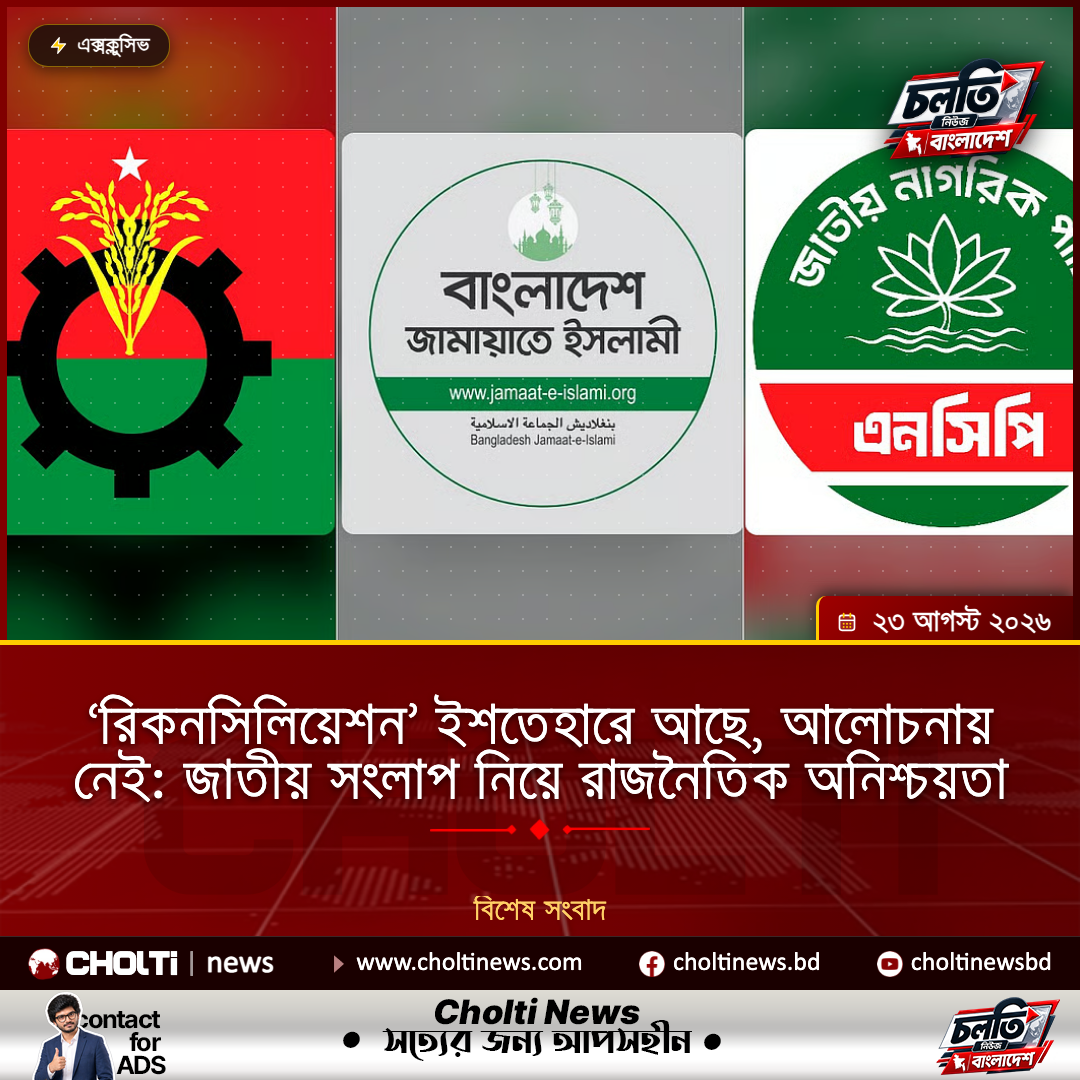
Despite electoral pledges by major political parties to establish a Truth and Reconciliation Commission to heal deep-seated national divisions, the initiative remains entirely stalled. Six months into the new administration's tenure, the absence of legislative debate or policy formulation highlights a persistent gap between political rhetoric and genuine transitional justice.
- Despite manifesto pledges by BNP, Jamaat, and NCP to form a Truth and Reconciliation Commission, no concrete steps have been taken six months after government formation.
- Political parties attribute the current deadlock to the ousted Awami League's refusal to acknowledge past crimes and its ongoing destabilizing threats.
- Analysts emphasize the urgent need for an independent truth commission to address historical grievances spanning from 1971 to the July-August 2024 massacres.
National Investment & Sovereign Savings Bond Scheme
Secure high guaranteed yields backed by official treasury securities.
The promise of establishing a Truth and Reconciliation Commission, once heralded by major political parties as a cornerstone for ending Bangladesh's cycle of political vengeance and division, has been relegated to mere paper. Despite widespread public aspirations for a peaceful transition and a departure from historical animosities, there is currently no visible initiative at the policy-making level to bring this commission to fruition. Citizens and civil society members had hoped that addressing past political persecutions and human rights violations systematically would pave the way for national unity. However, six months after the formation of the new administration, this critical national agenda remains conspicuously absent from parliamentary and political discourses.
A review of recent election manifestos reveals that the Bangladesh Nationalist Party (BNP) and Jamaat-e-Islami committed to forming a "Truth and Healing Commission," while the National Citizen Party (NCP) pledged a "Truth and Reconciliation Commission." This builds on a historical precedent from 2018 when the Jatiya Oikyafront promised a "Unified All-Party Truth-Finding and Dispute Resolution" commission. The necessity of such an institution is underscored by a long history of violence, spanning from the atrocities of the 1971 Liberation War to enforced disappearances under subsequent regimes, and culminating in the July-August 2024 mass killings. Yet, the failure to operationalize these pledges raises critical questions about whether they were merely rhetorical tools designed to garner electoral support.
In defense of the delay, political leaders argue that the current administration has only been in power for six months, a timeframe they deem insufficient to establish such a complex institutional framework. Furthermore, they point out that the ousted Awami League has neither acknowledged its historical misdeeds nor ceased issuing destabilizing threats, making immediate reconciliation efforts practically unfeasible. While the interim government initially echoed the sentiment of establishing a truth commission, it has since shifted its focus to other immediate administrative reforms. Political analysts observe that a profound lack of mutual trust among active political entities has effectively stalled any preliminary dialogue on the matter.
From the editorial perspective of Cholti News, achieving sustainable democracy and political stability in Bangladesh is impossible without confronting historical truths and healing systemic wounds. When political parties prioritize immediate power dynamics over long-term structural reforms, vital initiatives like national reconciliation are invariably sidelined. Drawing lessons from successful international models like South Africa and Rwanda, Bangladesh must establish an independent truth commission that moves beyond retributive justice toward national healing. Political entities must transcend partisan interests and honor their manifesto commitments to prevent the country from sliding back into its historical cycle of polarization.
“The establishment of a Truth and Reconciliation Commission must be treated as a core state reform rather than a mere political slogan. Without genuine political will and mutual trust among parties, achieving national unity will remain an elusive goal.”
Digital Innovation Summit 2026
Join South Asia's leading tech and AI entrepreneurship summit.