
Trump Administration Shifts Stance, Warms Up to Myanmar Junta
1-Click Audio Report (Universal Voice)
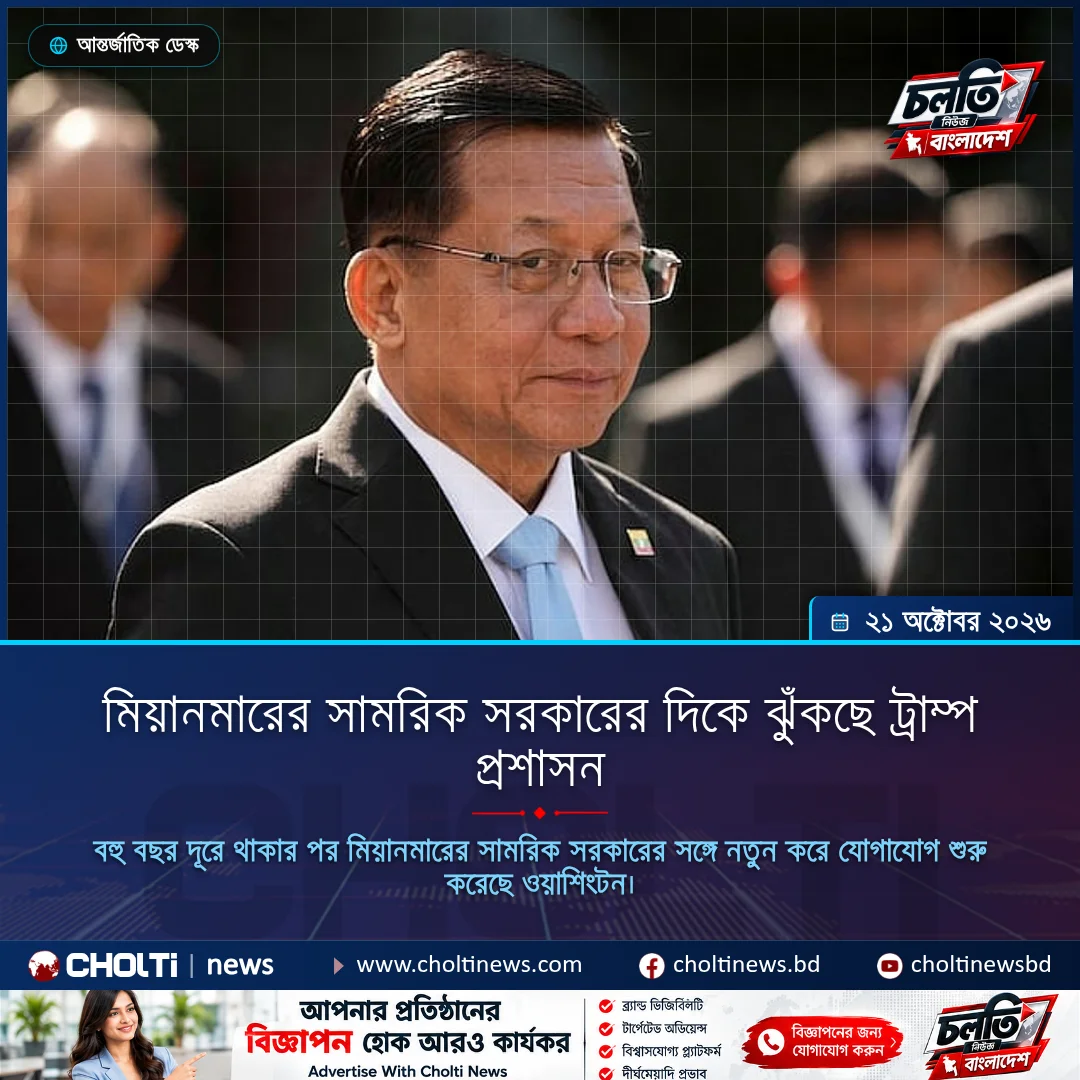
Signaling a notable foreign policy shift, the Trump administration has renewed diplomatic contact with Myanmar's ruling military junta. US Assistant Secretary of State Michael Vance recently held in-person discussions with junta chief Min Aung Hlaing in Naypyidaw, marking the highest-level bilateral engagement since the 2021 coup.
- First direct high-level meeting between a US official and junta leader Min Aung Hlaing since the 2021 coup.
- US eases pressure by removing several prominent Myanmar businessmen from its sanctions list.
- Bilateral talks ostensibly centered on freeing an American detainee expanded into broader strategic issues.
National Investment & Sovereign Savings Bond Scheme
Secure high guaranteed yields backed by official treasury securities.
Washington appears to be recalibrating its longstanding stance of isolating Myanmar's military regime, as Donald Trump's administration seeks renewed bilateral dialogue. In a historic development since the February 2021 coup, US Assistant Secretary of State for Intelligence and Research Michael Vance recently traveled to Naypyidaw to meet junta chief Min Aung Hlaing. Coupled with Washington's decision to drop sanctions against several prominent Myanmar businessmen, the meeting marks a clear indication of a shifting diplomatic approach toward the military-led nation.
Following the ouster of Aung San Suu Kyi's elected administration in 2021, Washington had kept official diplomatic exchanges to a minimum while levying severe financial sanctions. However, Vance's high-stakes mission on September 15 and 16 officially sought the release of US citizen Adam Castillo, who was detained in June amid a dispute involving the local American Chamber of Commerce. Observers familiar with the visit noted that the bilateral conversations extended far beyond consular affairs to encompass mutual geopolitical and strategic interests.
Prior to the Naypyidaw meeting, backchannel discussions had been underway. Vance reportedly met with Myanmar regime officials as well as anti-junta opposition figures during engagements in Tokyo in June and earlier this month. Analysts interpret these actions, combined with the selective removal of sanctions, as Washington's attempt to counterbalance expanding Chinese influence in Myanmar and secure regional footholds rather than adhering purely to ideological pressure.
This pragmatic diplomatic pivot by the Trump administration may significantly reshape the political dynamics across Southeast Asia. While human rights advocates raise concerns over potentially legitimizing an internationally isolated junta, US foreign policy pragmatists argue that direct dialogue is essential to securing strategic regional balance and protecting Washington's core geopolitical priorities in the Indo-Pacific.
“Departing from a purely rights-centric approach, the Trump administration appears to be adopting realpolitik in Myanmar to curb Beijing's unchallenged dominance and reassert American leverage in Southeast Asia.”
Digital Innovation Summit 2026
Join South Asia's leading tech and AI entrepreneurship summit.