
Bangladesh and Algeria Sign Landmark Energy Cooperation Agreement
1-Click Audio Report (Universal Voice)
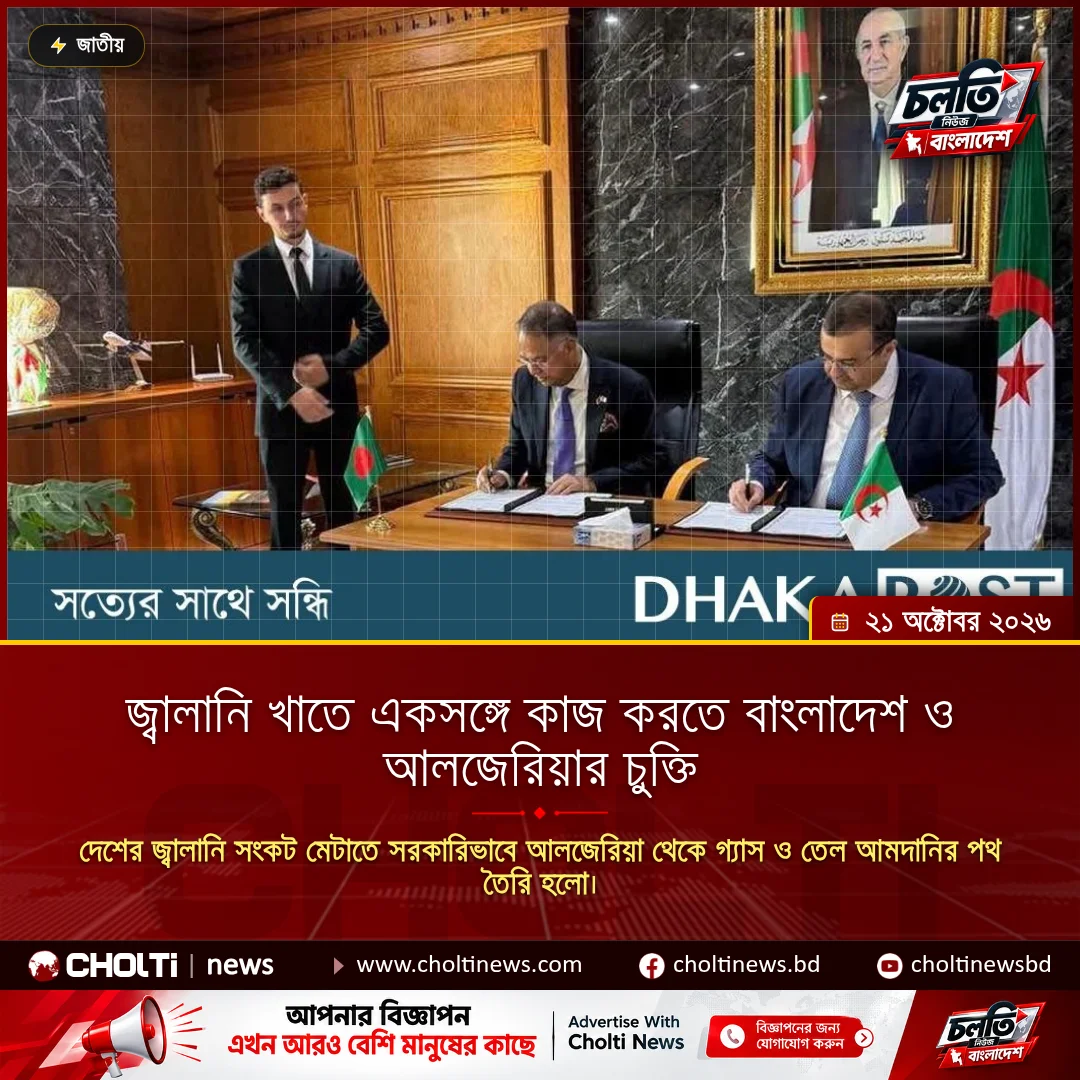
Bangladesh and Algeria signed a memorandum of understanding on hydrocarbon cooperation to enhance national energy security, opening doors for direct government-to-government imports of LNG, LPG, and petroleum products.
- Paves the way for G2G imports of LNG, LPG, and petroleum products from Algeria.
- Encourages Algerian cooperation in domestic oil, gas, and coal exploration infrastructure.
- Arranges technical training programs for Bangladeshi engineers and technicians.
National Investment & Sovereign Savings Bond Scheme
Secure high guaranteed yields backed by official treasury securities.
Bangladesh has signed a key memorandum of understanding on hydrocarbon cooperation with Algeria to secure its energy future and address persistent shortages. The agreement was finalized on Tuesday in an official ceremony attended by Bangladesh's Minister of Power, Energy, and Mineral Resources, Iqbal Hasan Mahmud, and Algeria's Minister of Hydrocarbons, Mohamed Arkab. The primary goal of the bilateral agreement is to build resilient supply chains through long-term partnerships beyond traditional markets.
During high-level discussions, both sides explored mechanisms for government-to-government (G2G) procurement of liquefied natural gas (LNG), liquefied petroleum gas (LPG), and refined petroleum products. The dialogue also covered technical collaboration in exploring domestic oil, gas, and coal reserves, as well as upgrading local energy processing facilities. This provides Bangladesh with strategic access to Algeria’s extensive hydrocarbon reserves and expertise.
Bangladeshi representatives also requested specialized training programs for local engineers and technical personnel to adopt Algerian best practices and modern extraction technologies. The Algerian leadership welcomed the request, expressing readiness to host transfer-of-knowledge initiatives. Officials highlighted that upgrading local technical competence remains a critical priority for sustaining the nation's energy infrastructure.
Expressing satisfaction after the signing, Bangladesh's energy minister noted that the pact opens an African supply corridor to safeguard domestic energy reserves. Analysts believe that implementing direct imports under this framework will help stabilize the country's industrial operations and power supply by reducing dependency on spot market price fluctuations.
“Partnering with Algeria represents a proactive diplomatic push to diversify Bangladesh's energy import basket. Relying less on spot markets through bilateral G2G deals shields domestic industries from volatile global prices. The focus must now swiftly shift toward resolving logistic and terminal bottlenecks to operationalize the agreement.”
Digital Innovation Summit 2026
Join South Asia's leading tech and AI entrepreneurship summit.