
Osmani Udyan Reopens After 9 Years with BDT 10 Entry Fee
1-Click Audio Report (Universal Voice)
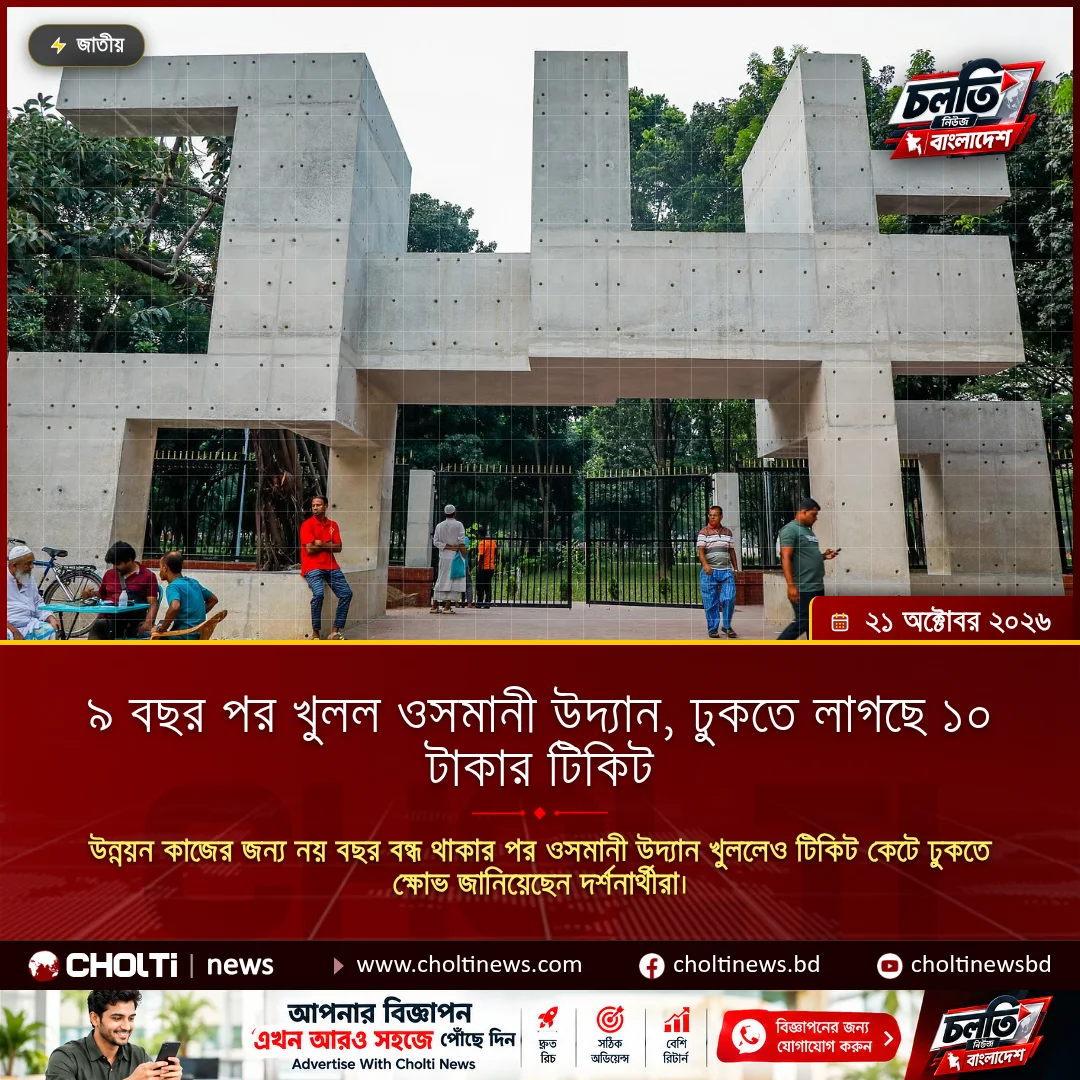
After remaining closed for nine years due to redevelopment, Osmani Udyan in Dhaka has reopened to the public with a newly imposed entry fee of BDT 10 per person, sparking discontent among visitors.
- Dhaka's historic Osmani Udyan reopened to the public after being closed for nine years for redevelopment.
- Dhaka South City Corporation has introduced a BDT 10 entry fee per visitor.
- Citizens and visitors voiced frustration over the fee, noting that parks like Ramna and Suhrawardy Udyan remain free.
National Investment & Sovereign Savings Bond Scheme
Secure high guaranteed yields backed by official treasury securities.
After nine long years of closure under the banner of renovation, the historic Osmani Udyan in Gulistan, Dhaka, has finally been reopened to the public. Visitors of various ages started arriving on Tuesday morning following its official inauguration. However, the introduction of a BDT 10 entry fee per person by the Dhaka South City Corporation (DSCC) quickly dampened the enthusiasm of regular visitors, triggering visible frustration.
Covering 21.85 acres between Nagar Bhaban and the Bangladesh Secretariat, Osmani Udyan has historically served as a vital green lung for the capital. Named after General M. A. G. Osmani, commander-in-chief of Bangladesh's Liberation War forces, the park was closed for nearly a decade for modernization projects, depriving downtown residents of an accessible open recreational space.
Visitors who arrived on Tuesday morning were surprised to be stopped at the gates and asked to purchase entry tickets. Critics pointed out that iconic metropolitan parks such as Ramna Park and Suhrawardy Udyan do not charge entry fees, nor did Osmani Udyan prior to its closure. On-duty DSCC personnel defended the move, stating that the fee was introduced pursuant to official directives to recover development and maintenance expenditures.
In an overcrowded metropolis grappling with shrinking green spaces, urban planners and civic activists emphasize that public parks should remain unconditionally accessible to citizens of all economic backgrounds. Many visitors have urged the city authorities to reconsider the decision and make the park completely free to preserve its status as an inclusive public haven.
“Barring citizens from a major public park for nine years and then imposing entry fees reflects exclusionary urban management. Public parks funded by taxpayers should remain universally accessible rather than monetized commercial assets.”
Digital Innovation Summit 2026
Join South Asia's leading tech and AI entrepreneurship summit.