
Global Energy Crisis Puts Bangladesh Garment Sector at Risk
1-Click Audio Report (Universal Voice)
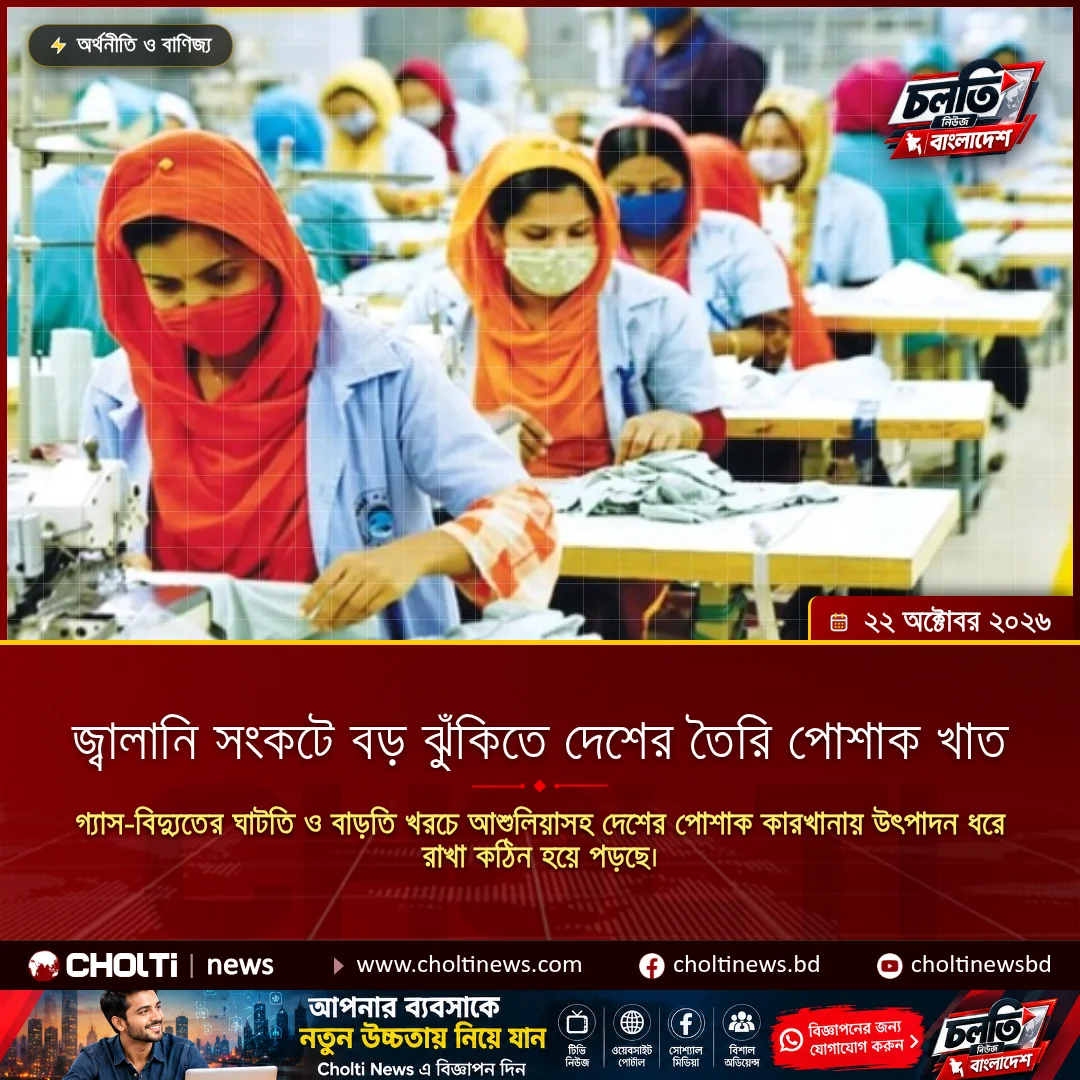
Bangladesh's readymade garment sector faces unprecedented challenges amid a severe domestic power and gas crunch driven by global energy market volatility. Reliance on costly diesel generators is sharply driving up operational costs.
- Industrial gas prices have spiked by 150% and diesel prices have risen by nearly 70%.
- National electricity deficit has surpassed 3,000 MW, severely interrupting production cycles.
- Global buyers are reluctant to raise garment purchase prices despite escalating production costs.
National Investment & Sovereign Savings Bond Scheme
Secure high guaranteed yields backed by official treasury securities.
In major garment industrial hubs like Ashulia and Savar near Dhaka, ongoing manufacturing momentum is frequently paralyzed by recurrent power cuts. Inside major factories, including those operated by Ha-Meem Group, production floors plunge into sudden darkness before heavy diesel generators kick in to maintain operations. Industry officials point out that maintaining baseline operations with expensive backup fuels has drastically compromised production efficiency and overall financial viability.
The readymade garment industry forms the bedrock of Bangladesh's economy, accounting for over 80 percent of export revenues and employing around 4 million workers. Since the escalation of the Russia-Ukraine war, domestic industrial gas tariffs have jumped by roughly 150 percent, while diesel prices rose by nearly 70 percent. Compounded by soaring global liquefied natural gas (LNG) prices, factory operating costs have surged dramatically, yet international buyers remain reluctant to adjust purchasing prices upwards.
Nationwide power deficits have surpassed 3,000 megawatts, prompting government authorities to enforce austerity measures, including reducing commercial lighting and curtailing retail market hours. Rural regions endure up to 16 hours of daily blackouts, disrupting ordinary life and small businesses. Experts emphasize that years of inadequate investment in domestic gas exploration and heavy reliance on imported fuels have left Bangladesh acutely vulnerable to external energy supply shocks.
Energy analysts and industry leaders stress that sustainable economic stability depends on rapidly reforming national energy strategies and reviving domestic gas exploration. Without targeted interventions to modernize energy grids and ensure uninterrupted power supply, the garment sector risks losing its competitive edge on the global stage, endangering export revenues and the livelihoods of millions of industrial workers.
“An import-dependent energy strategy is actively jeopardizing Bangladesh's core economic pillar, the garment industry. Long-term resilience demands rapid domestic exploration and renewable adoption.”
Digital Innovation Summit 2026
Join South Asia's leading tech and AI entrepreneurship summit.