
Six Foreign Ministers Meet with Erdogan Over Middle East Crisis
1-Click Audio Report (Universal Voice)
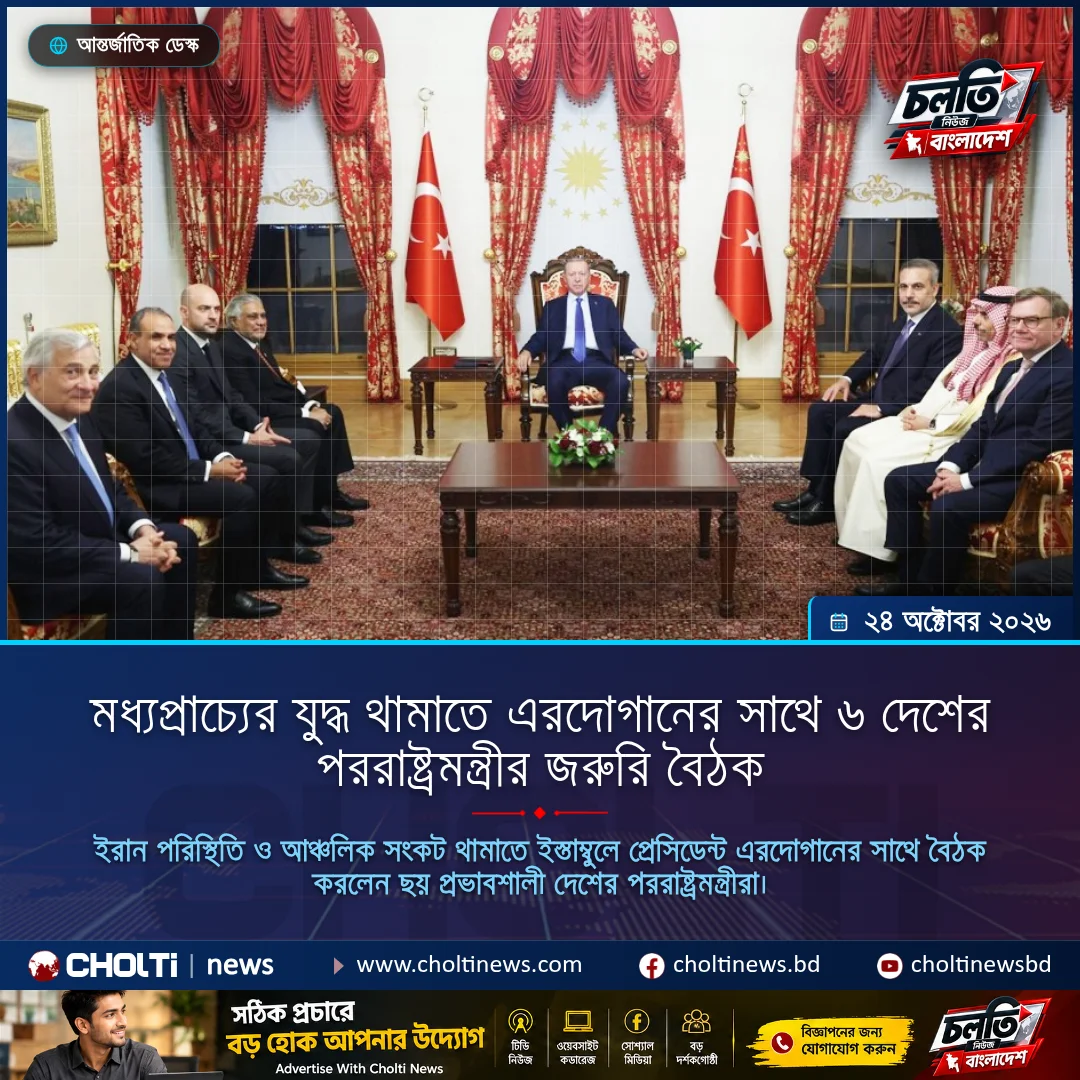
Foreign ministers from six key nations met with Turkish President Recep Tayyip Erdogan in Istanbul to discuss escalating Middle East tensions, Iran-US conflict dynamics, and regional security cooperation through diplomatic channels.
- Foreign ministers from Pakistan, Saudi Arabia, Egypt, Germany, France, and Italy held talks with President Erdogan in Istanbul.
- Discussions focused on escalating tensions involving Iran, Houthi attacks on Saudi Arabia, and the ongoing war in Ukraine.
- The participating nations prioritized diplomatic solutions and improved multilateral coordination to de-escalate crises.
National Investment & Sovereign Savings Bond Scheme
Secure high guaranteed yields backed by official treasury securities.
In a significant diplomatic move aimed at averting a wider regional conflict, foreign ministers from six influential nations met with Turkish President Recep Tayyip Erdogan in Istanbul. The high-level gathering included the top diplomats from Pakistan, Saudi Arabia, Egypt, Germany, France, and Italy. The discussions primarily focused on evaluating the deteriorating security landscape across the Middle East and seeking shared paths toward de-escalation.
Prior to their session with President Erdogan, the ministers convened under the 'R4 plus E3' framework to align their strategic priorities. The comprehensive discussions delved deeply into the simmering hostilities involving Iran and the United States, as well as the broader instability threatening regional waterways and energy corridors. The ongoing conflict between Russia and Ukraine and its ripple effects on global security were also examined.
The meeting paid close attention to security concerns in the Gulf, particularly the threats posed by Iranian-aligned Houthi attacks targeting Saudi territory. Participating envoys emphasized that sustainable peace cannot be attained through military escalation, advocating instead for relentless diplomatic dialogue. The leaders stressed the urgency of strengthening multilateral coordination, crisis communication, and joint efforts to curb cross-border aggression.
Diplomatic observers view Turkey's role in convening both Western powers and key Muslim-majority nations as a crucial effort to mediate complex geopolitical disputes. As proxy conflicts threaten to engulf the wider Middle East, the global community is closely watching whether this multi-nation diplomatic push can pave the way for tangible ceasefires and lasting stability in the region.
“The Istanbul summit underscores that regional and global powers are determined to rely on multilateral diplomacy to prevent unmitigated conflict escalation in the Middle East, while cementing Turkey's pivotal status as a bridge builder between East and West.”
Digital Innovation Summit 2026
Join South Asia's leading tech and AI entrepreneurship summit.