
Environment State Minister Visits River Erosion Sites in Rampal, Assures Sustainable Piling Dam Construction
1-Click Audio Report (Universal Voice)
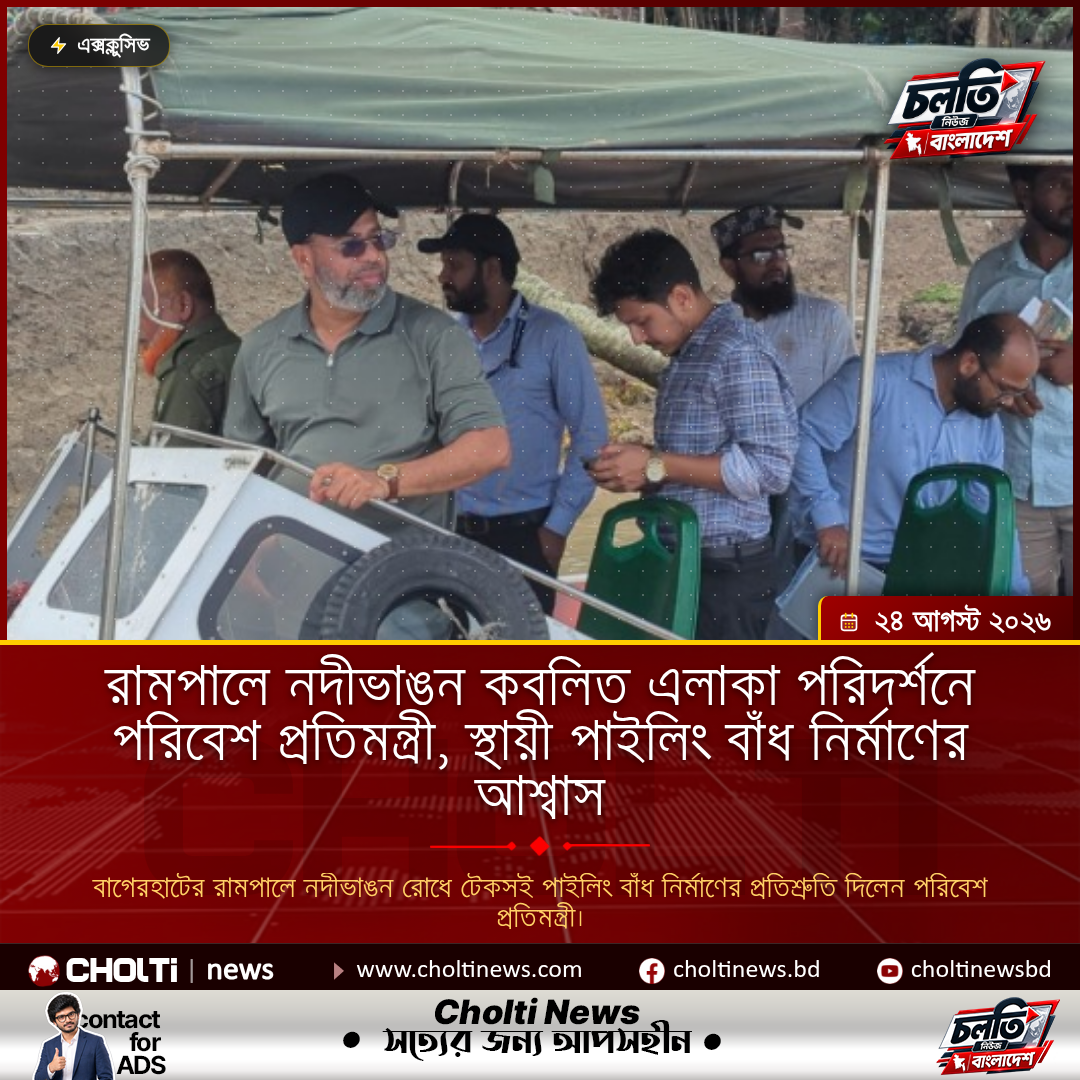
The State Minister for Environment, Forest, and Climate Change has visited the river erosion-affected areas in Rampal, Bagerhat, promising immediate measures. He assured the local community of constructing a sustainable piling embankment to prevent further land loss. The initiative aims to address the long-standing demands of residents suffering from the erosion of the Pashur and Mongla rivers.
- The Environment State Minister visited erosion-hit areas in Rampal, Bagerhat, promising the construction of a sustainable piling dam.
- Projects are being formulated in coordination with the Water Development Board to initiate work before the monsoon season.
- Local residents demanded permanent engineering solutions over temporary geo-bags to counter the erosion of the Pashur and Mongla rivers.
National Investment & Sovereign Savings Bond Scheme
Secure high guaranteed yields backed by official treasury securities.
The State Minister for Environment, Forest, and Climate Change recently visited the river erosion-affected areas in Rampal Upazila of Bagerhat to assess the damage and stand by the vulnerable coastal communities. During his visit, he directly interacted with the affected residents whose homes and agricultural lands are continuously being devoured by the turbulent rivers. Every monsoon, rising tides and strong currents exacerbate the erosion, threatening the livelihoods of thousands in this coastal belt. The minister's visit has brought a ray of hope to the locals, who have been demanding a permanent solution to this recurring disaster for years. He assured them that the government is committed to taking swift and effective measures to halt the erosion.
Geographically situated near the Sundarbans, Rampal is highly vulnerable to tidal surges and river dynamics, with the Pashur and Mongla rivers causing severe damage annually. Climate change has intensified the frequency and scale of these natural disasters, pushing local ecosystems and the agrarian economy to the brink of collapse. Over the past few years, hundreds of families have been displaced, losing their ancestral homes and arable lands to the riverbed. Local representatives point out that past temporary measures, such as dumping geo-bags, failed to provide a lasting solution to the problem. Consequently, there is an urgent need for a robust engineering intervention to protect the remaining land and infrastructure.
During the inspection, the State Minister assured the public that a sustainable piling embankment would be constructed in coordination with the Water Development Board. He stated that high-risk zones are being identified to design targeted projects so that construction can begin before the upcoming monsoon. Local administration and water board officials have been instructed to maintain constant vigilance on the vulnerable points of the riverbanks. Furthermore, the minister mentioned that discussions are underway with the Ministry of Disaster Management to ensure rehabilitation and emergency support for the displaced families. The local community has urged the authorities to translate these promises into action without administrative delays.
Addressing river erosion in coastal Bangladesh requires moving beyond traditional embankments toward long-term, nature-based solutions aligned with the Delta Plan 2100. Integrating river dredging with mangrove afforestation along the banks could offer a more resilient shield against tidal surges and soil erosion. The primary challenge lies in overcoming bureaucratic bottlenecks and ensuring transparency in project execution to prevent funds from being wasted. If the Environment Ministry's assurances are swiftly translated into visible progress on the ground, it will secure the lives and livelihoods of thousands in Rampal.
“Temporary embankments are insufficient to tackle coastal erosion; instead, eco-friendly, long-term strategies aligned with Delta Plan 2100 are essential. Ensuring transparency in project execution and eliminating bureaucratic delays remain the primary challenges for the administration.”
Digital Innovation Summit 2026
Join South Asia's leading tech and AI entrepreneurship summit.